
Where the F60 TC pays off
The best sites have three things in common: wood residues or access to regional chips, a heat demand all year round and electricity consumption around the clock. These are the industries where that comes together.
What every application has in common
- Own power
Significantly lower electricity costs
Your own power is produced on site, behind the meter – it significantly reduces what you buy from the grid and protects you from price jumps.
- Up to 100 %
Independent of gas and propane
The heat from the F60 TC replaces natural gas, LPG or heating oil – up to 100 % of your heat production, with green, renewable energy from regional biomass.
- 4–6 years
Typical payback
At sites that can use both the electricity and the heat, the investment typically pays back in 4 to 6 years.
Example calculation
A realistic site with year-round use of electricity and heat – the same values are preset in the configurator.
Assumptions
- Plant
- 1 × F60 TC – 80 kW electrical, 158 kW thermal
- Building
- existing hall or building available
- Operating hours
- 8,200 h per year
- Electricity price today
- 0.22 € per kWh
- Heat price today (gas, propane)
- 0.08 € per kWh, heat used 6,000 h per year
- Wood chips
- 33 € per loose m³
- Investment subsidy
- 30 %
- Financing
- 100 % loan at 4.5 % interest, 20 years
- Operation
- customer operates, FLOYD maintains
Result
- €450k – €600ktotal investment, turnkey, before subsidies – about €315k – €420k after the 30 % subsidy
- 3–5 yearspayback
- 0.13–0.16 €cost of your own electricity per kWh – instead of 0.22 €
- 656 MWhelectricity per year
- 948 MWhheat per year – replaces about 105,000 m³ natural gas or 148,000 l propane
- ~25 tbiochar and ~74 t CO₂ removal per year
Without investment subsidy the payback is 5–7 years; if FLOYD also supplies the building, 4–6 years with subsidy. Gas and propane equivalents assume a boiler efficiency of 90 %. Estimate, not an offer.
How the F60 TC follows your demand
Choose a typical site and switch the battery on or off. The chart shows one working day, hour by hour.
- of the electricity from your own plant
- bought from the grid per day
- 0 kWh
- surplus fed into the grid
Renewable power that doesn’t wait for the weather
Sun, wind and water deliver when nature allows – hour by hour and season by season. The F60 TC turns stored wood into electricity and heat around the clock, 365 days a year. For anyone aiming at 100 % energy self-sufficiency, that is the missing piece.
Base load, not weather load
Output is set by your demand, not by clouds, calm days or low water.
Winter is the strong season
When solar yields drop and heat demand peaks, the F60 TC delivers both power and heat.
The partner for solar and storage
Combine it with PV and a battery: the sun covers summer middays, the F60 TC covers nights, winter and dark days.
Day, night, summer, winter: how energy sources compare
| Energy source | Day and night | Summer and winter | Price | Heat as well |
|---|---|---|---|---|
| Grid electricity | Always available | Always available | Market price plus grid charges and levies | No |
| Natural gas, propane, oil | Always available | Always available | Fossil, volatile, rising CO₂ costs | Yes – but fossil |
| Solar PV | Daytime only, dips with clouds | Strong in summer, weak in winter | No fuel cost, little yield in winter | No |
| Wind | Comes and goes with the weather | More in winter, calm spells in summer | No fuel cost, intermittent | No |
| FLOYD F60 TC | Around the clock, follows your demand | Same output in every season | Regional wood chips – stable, local price | Yes – 158 kW per unit, renewable |
Schematic, typical profiles for Central Europe, shown as a share of each plant’s rated output. Real yields vary by site and year. F60 TC shown at rated output; planned maintenance not shown.
Sawmills
Offcuts, bark and chips are produced every day – while saws, kilns and dryers run on bought electricity and fossil heat.
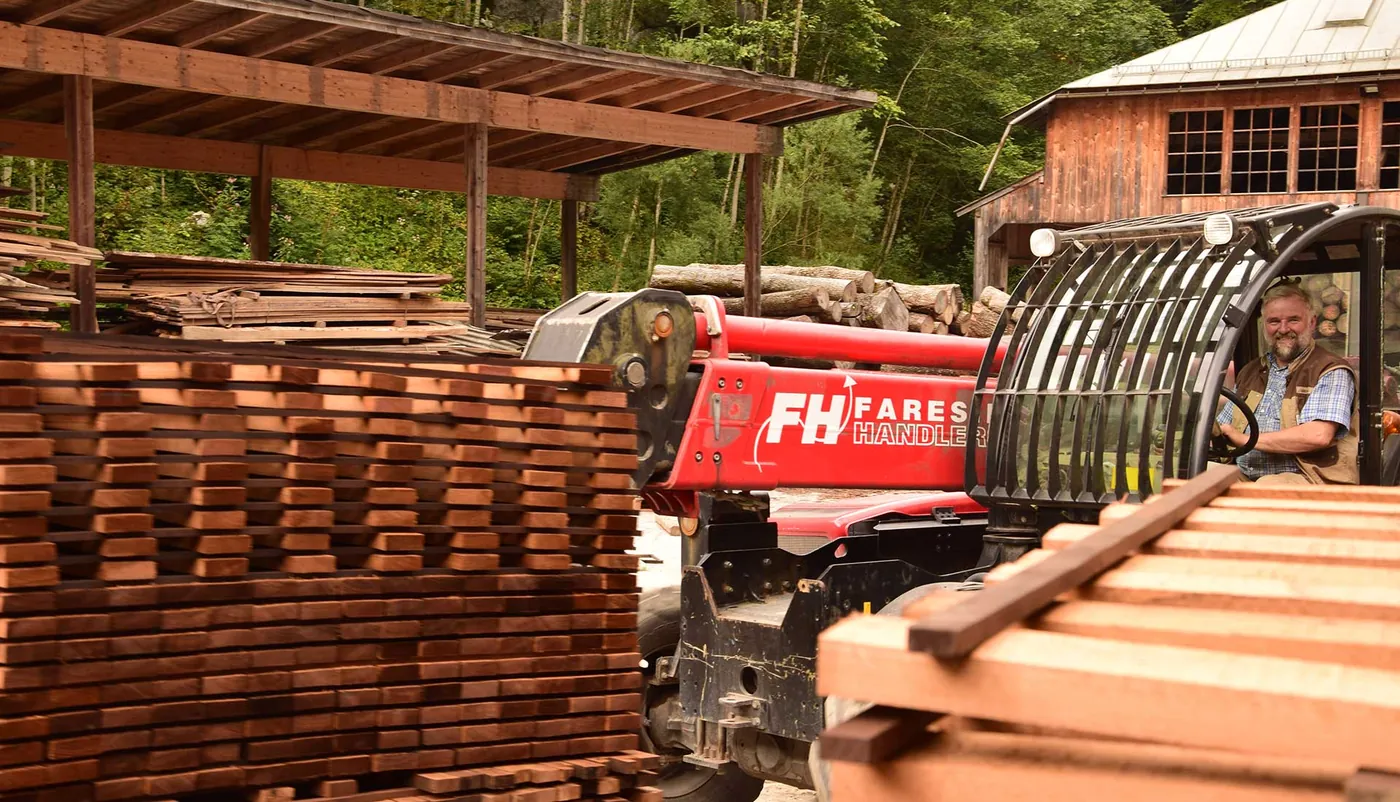
- Own residues become fuel: no transport, no disposal cost
- Heat for dry kilns and pre-heating of combustion air
- Power for saws, conveyors and kiln fans behind the meter
- Surplus fibre can supply F60 plants of neighbouring businesses
Wood-processing companies
Joineries, pallet, board and pellet producers, timber construction: wherever wood is processed, residues accumulate.
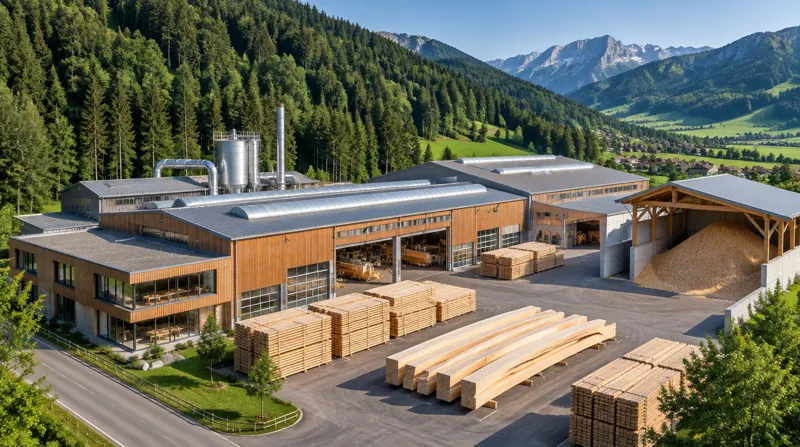
- Offcuts and chips are chipped to the FLOYD standard on site
- Heat for drying, gluing and pressing processes and for the halls
- Stable power costs for energy-intensive machines
- Material handling from BE&E, designed for woody, fibrous material
District heating
Heat networks need base-load heat all year – also in summer for hot water. The F60 TC delivers it and produces renewable electricity at the same time.
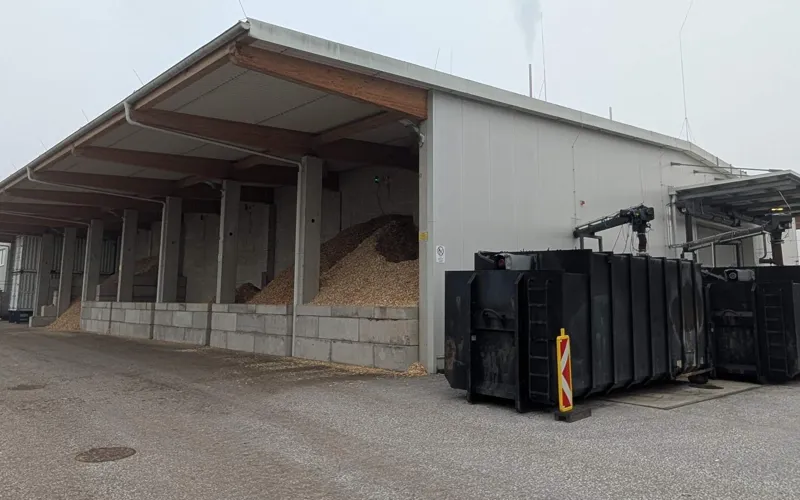
- Year-round base load next to existing biomass boilers
- Electricity for own pumps and buildings, or fed into the grid
- Several units in parallel: one is serviced, the others keep supplying
- Also as energy contracting: FBE Griffen invests, you buy the heat
Spa hotels, resorts and casinos
Pools, saunas, laundries, kitchens and air conditioning need heat and power 24 hours a day, 365 days a year.
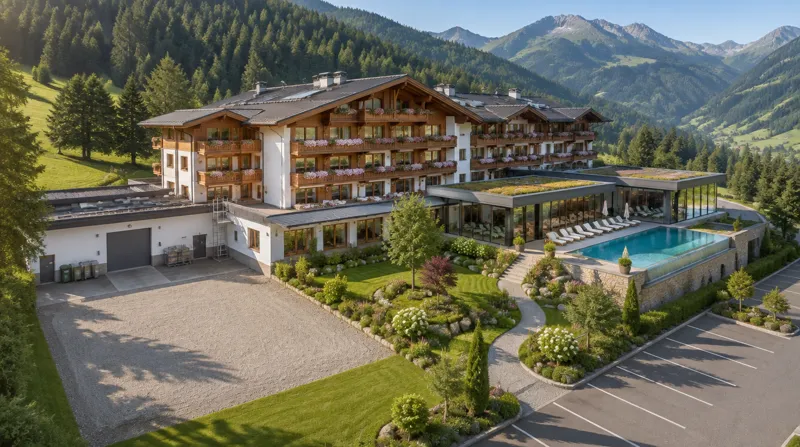
- Constant base load for pools, spa and hot water
- Own power covers lighting, kitchen and HVAC
- A visible sustainability story for guests: regional wood instead of oil and gas
- Combined with battery storage for peaks and resilience
Farms and agricultural businesses
Livestock and poultry farms, forestry farms and processors with their own wood or crop residues and a constant heat demand.
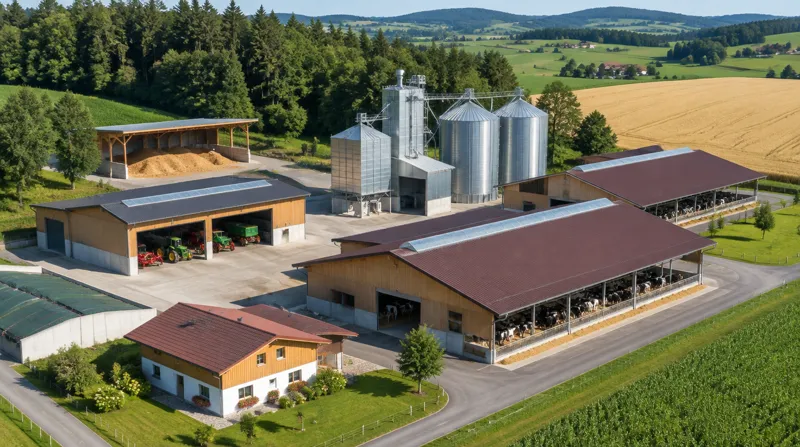
- Heat for barns, poultry houses and grain or wood-chip drying
- Own wood from forest and landscape maintenance as fuel
- Biochar for the farm’s own soil and manure management
- Re-use of existing infrastructure, e.g. former biogas plants
Energy-intensive industry and paint shops
Paint shops, stoving booths, drying and washing processes need a lot of heat at high temperature – and power all day.
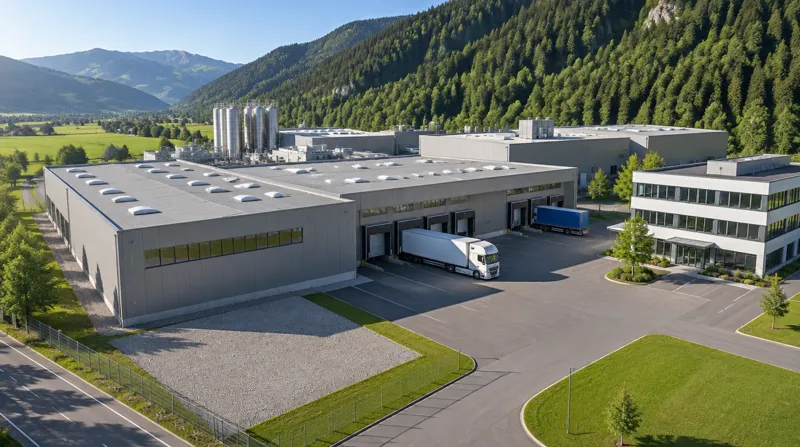
- Hot water up to 95 °C replaces oil or gas burners in stoving booths
- Buffer storage tanks decouple heat production and demand
- Power behind the meter for compressors, extraction and lighting
- Clean exhaust gas: strict local NOx limits are met
Greenhouses
Greenhouses need heat for most of the year and, with assimilation lighting, a lot of electricity.
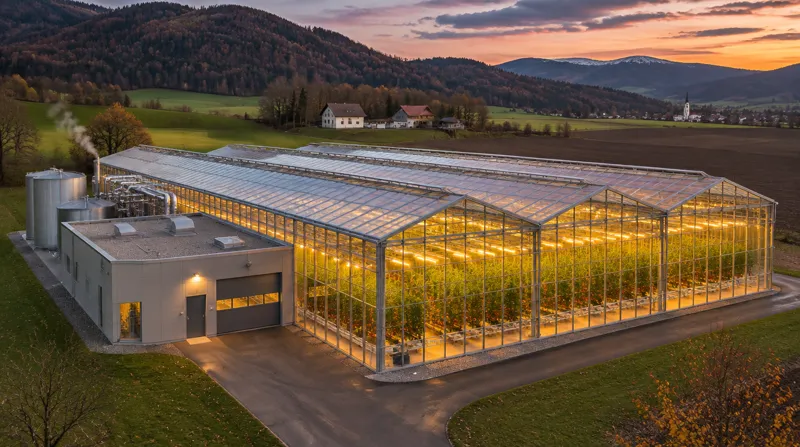
- Base-load heat for the greenhouse and the heat buffer
- Own power for lighting, pumps and climate control
- Biochar as a component of growing media and soil improvement
- Independent of gas prices – the largest cost driver in greenhouse horticulture
Wastewater treatment plants
A treatment plant is one of the largest electricity consumers of a municipality. Aeration, pumps and sludge treatment run around the clock – a load profile that matches a CHP almost perfectly.
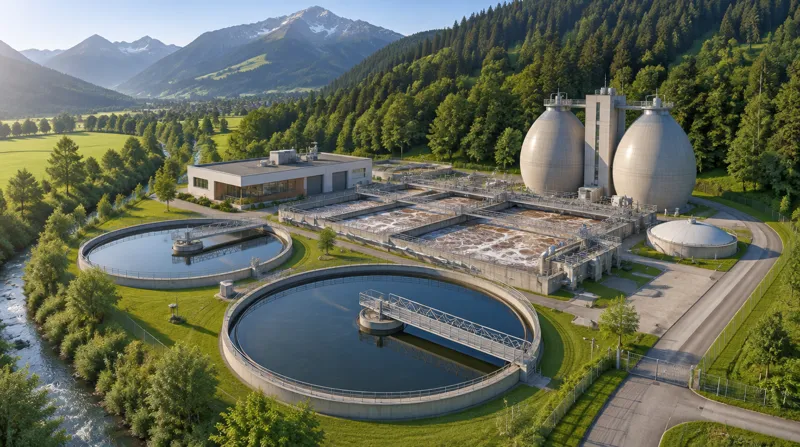
Base-load electricity on site
The F60 TC covers the constant base load of aeration and pumps behind the meter, modulating with demand. Digester-gas CHPs keep running; the F60 TC adds renewable power independent of the gas yield.
Heat for digester and sludge
Hot water up to 95 °C heats the digester and can dry sewage sludge, cutting transport and disposal costs.
Biochar in the digester
Peer-reviewed reviews report that adding biochar to anaerobic digestion increases methane yield and stabilises the process: it supports methane-forming microbes, enables direct electron transfer between them and buffers ammonia and acid inhibition. More digester gas means more energy from the plant’s own sludge.
Sludge conditioning and odour
Biochar is being used and tested as an additive for sludge dewatering and as an adsorbent against odours – applications we evaluate together with operators.
A regional carbon source
Biochar binds carbon permanently. Where activated, it can serve as an adsorbent – a field FLOYD is developing for the coming fourth treatment stage.
The F60 TC runs on wood chips to the FLOYD standard – for example from municipal green waste and tree maintenance. Sewage sludge itself is not used as fuel.
Biogas plants
Many biogas plants are approaching the end of their feed-in tariffs or face new legal and investment requirements. Their grid connection, heat network, buildings and permits remain valuable.
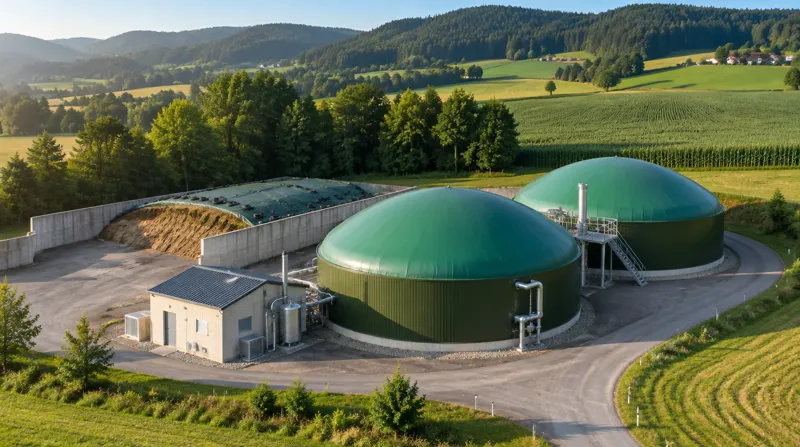
Re-use existing infrastructure
An F60 TC can use the grid connection, heat network and building of a biogas plant – as at Bioenergie Kampl in the Gurktal, where a dismantled 200 kW biogas plant is being replaced by an F60.
Complement the gas engine
Running alongside an existing biogas plant, the F60 TC adds renewable power and heats the digester, so more of the biogas goes into electricity.
More methane with biochar
Biochar added to the digester can raise methane yield and improve process stability, especially with nitrogen-rich substrates such as manure.
Better digestate
Digestate enriched with biochar returns carbon and nutrients to the field – a circular system from farm to farm.
Sources
- Directive (EU) 2024/3019 – summary
- European Parliament – legislative observatory 2022/0345(COD)
- Devi & Eskicioglu (2024): Effects of biochar on anaerobic digestion: a review. Environmental Chemistry Letters
- Qiu et al. (2019): A review on biochar-mediated anaerobic digestion with enhanced methane recovery. Renewable and Sustainable Energy Reviews
- Manga et al. (2023): Biochar and its potential application for the improvement of the anaerobic digestion process. Energies