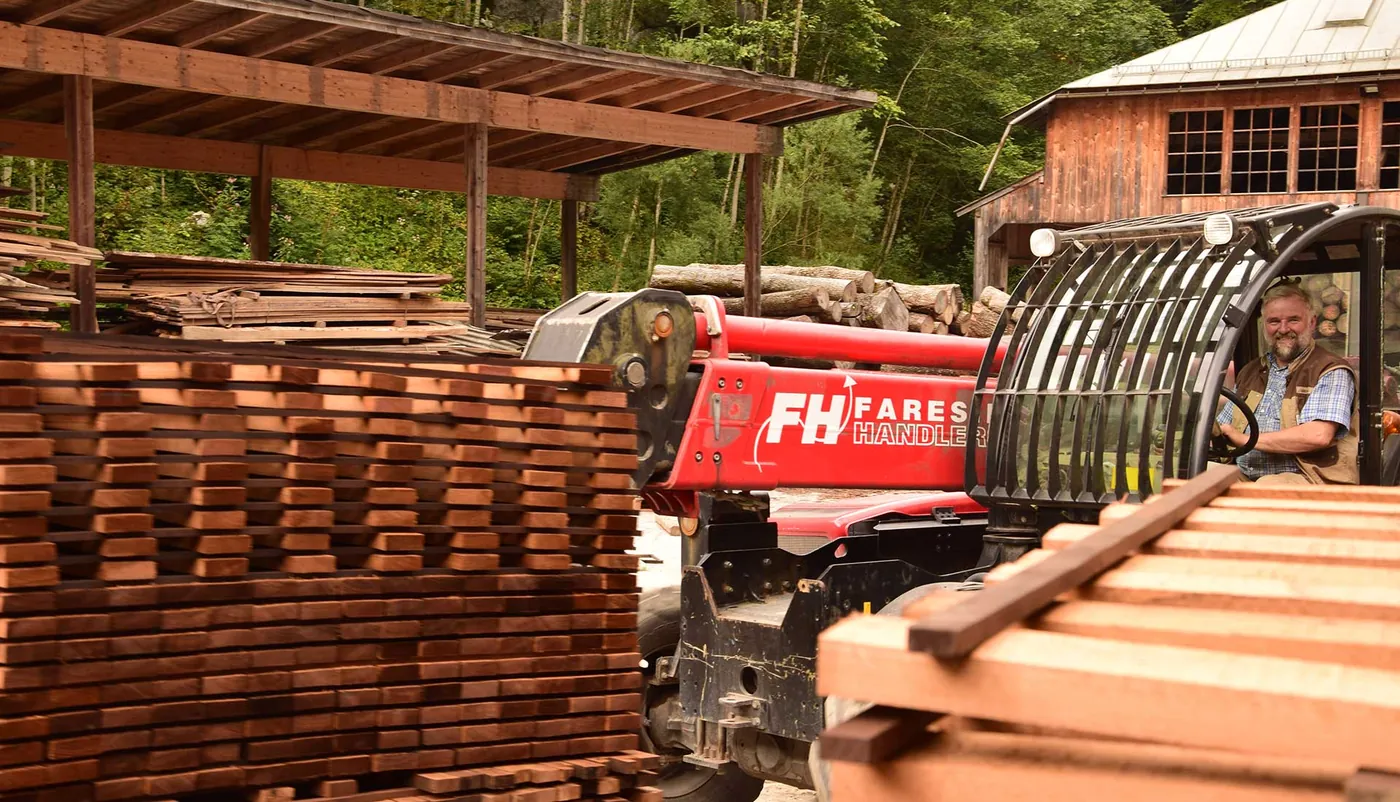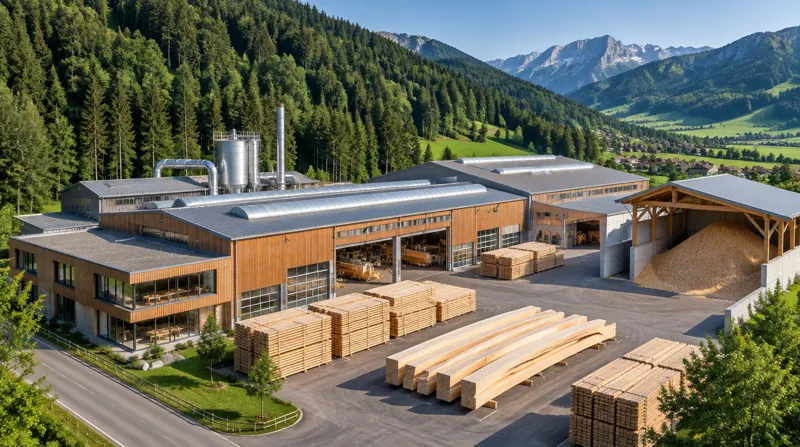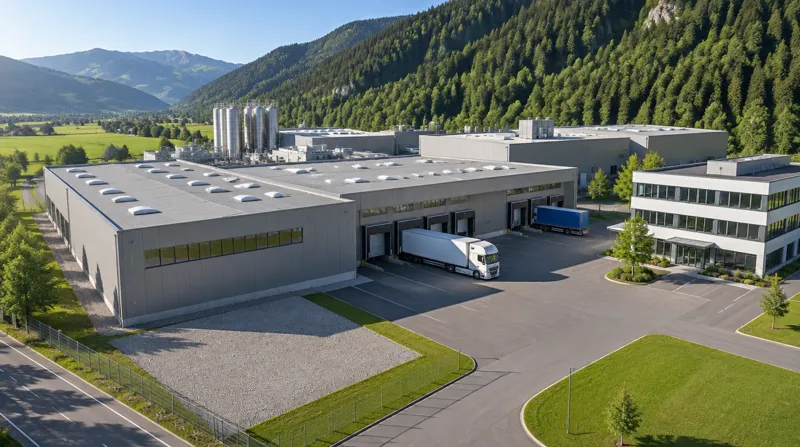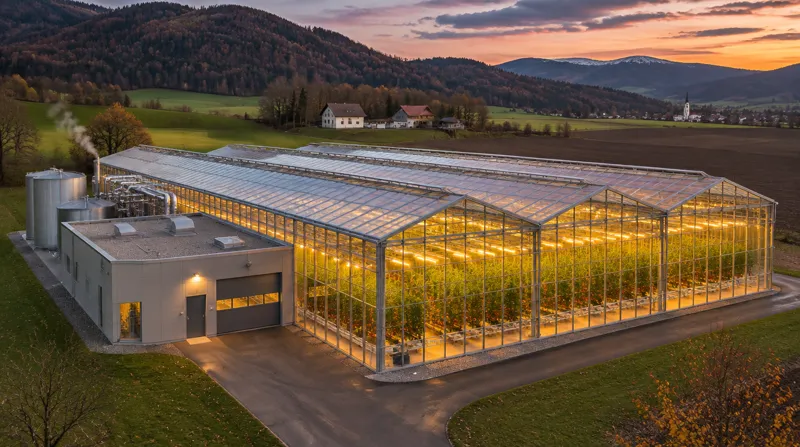
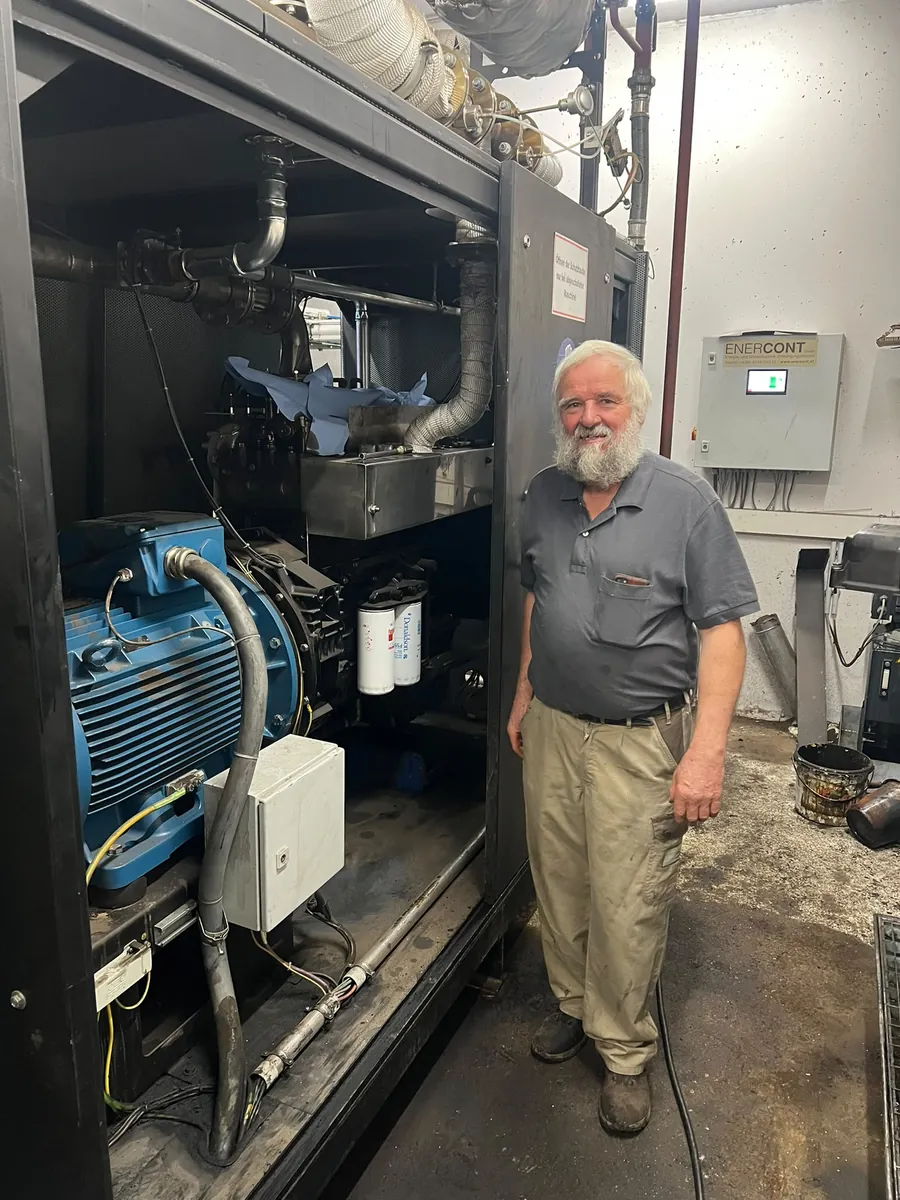
Salzburg, Austria – Family-run sawmill
Thermoholz Aberger
€10,000lower electricity costs per month, on average
- Electricity used directly at the sawmill, behind the meter
- Heat supplies a small local heating network
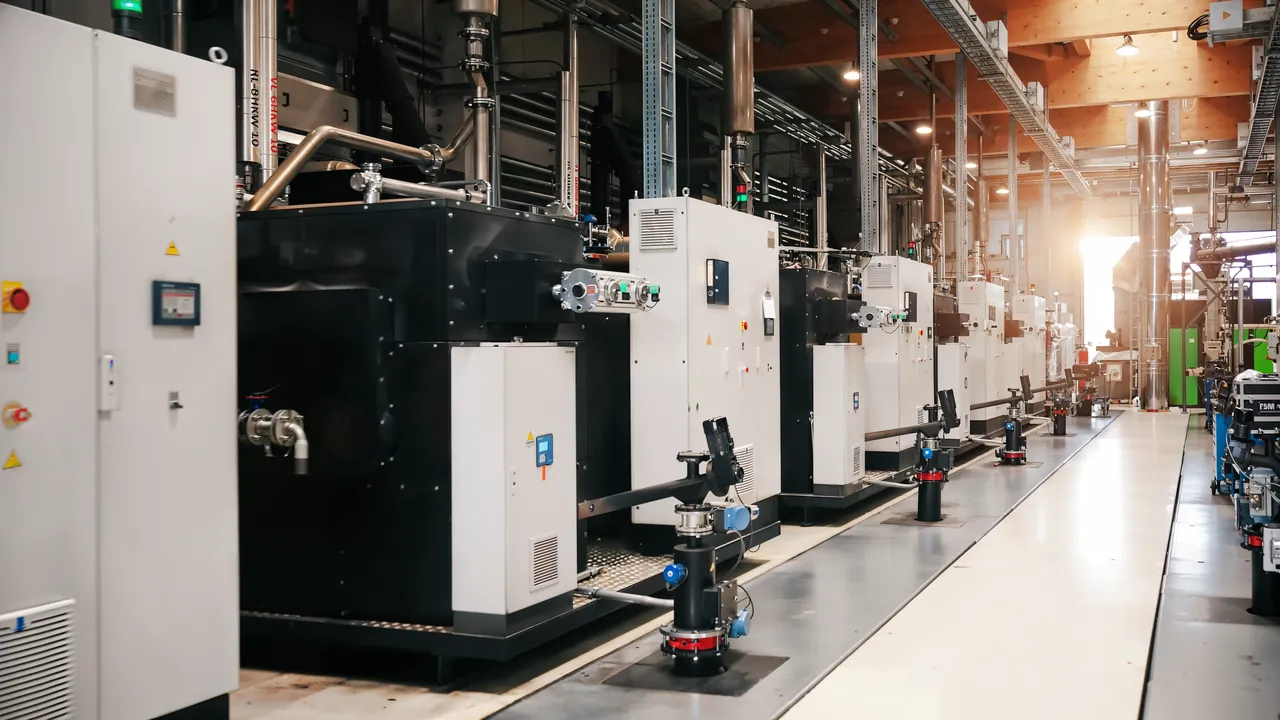
FLOYD plans, builds and looks after a small wood-fuelled power plant on your site. You get electricity, heat and costs you can plan – around the clock, independent of weather and energy prices.
One F60 TC unit, every day of the year
Your own small power plant on site. It runs on wood chips and supplies electricity and heat whenever you need them – while FLOYD takes care of the technology.
Produced on site and used directly – behind your meter, day and night.
Hot water for heating, pools, kitchens, kilns or a heating network.
Less dependent on electricity and gas prices, grid fees and levies.
Regional wood instead of oil and gas – plus biochar that stores CO₂.
Four steps from the first conversation to your own energy. You decide – we do the work.
We look at your energy bills, your heat demand and the space you have.
You get a clear calculation: what your own electricity costs and when the plant pays for itself.
Planning, permits, delivery, installation and commissioning – one partner, one contract.
FLOYD monitors the plant around the clock and services it. You simply use the energy.
The F60 TC runs on more than forest chips. What matters is a dry, free-flowing fuel of the right size.
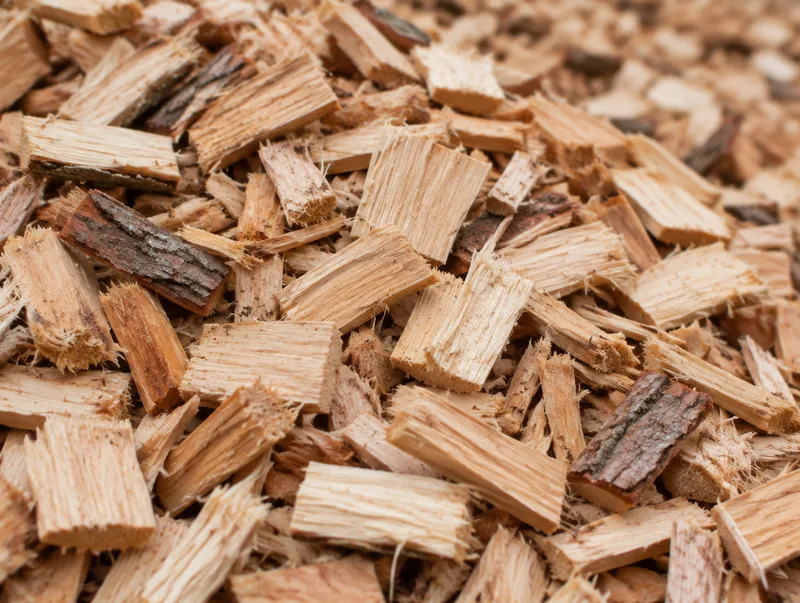
Particle size 5–60 mm.
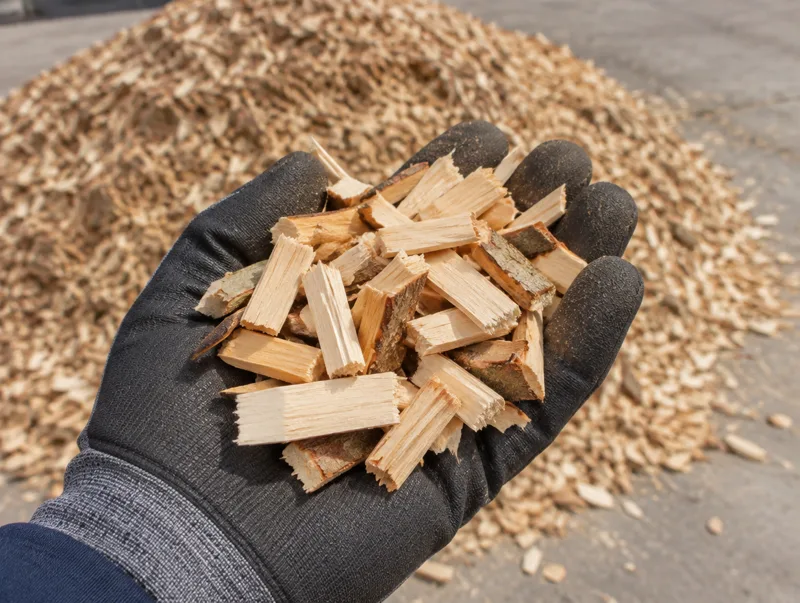
Slowly shredded and screened, pieces up to about 6–7 cm.
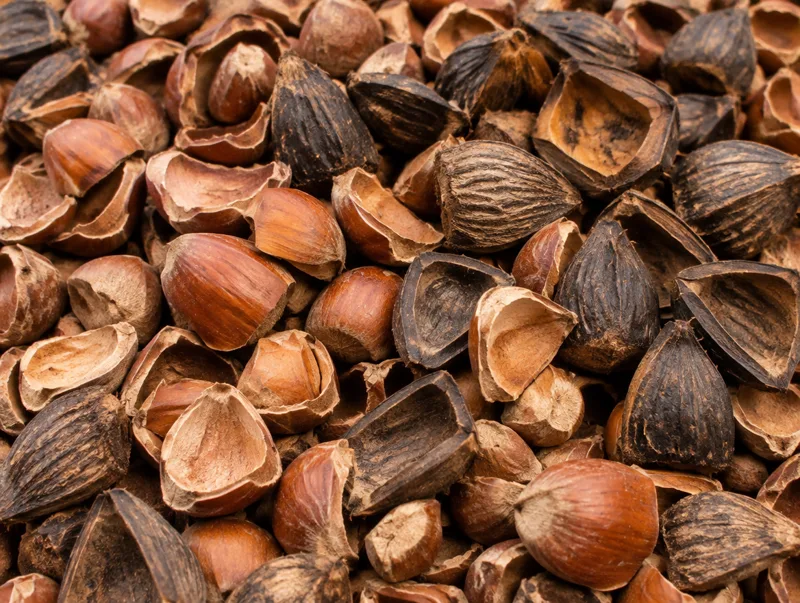
Palm kernel shells (PKS), hazelnut shells and others.
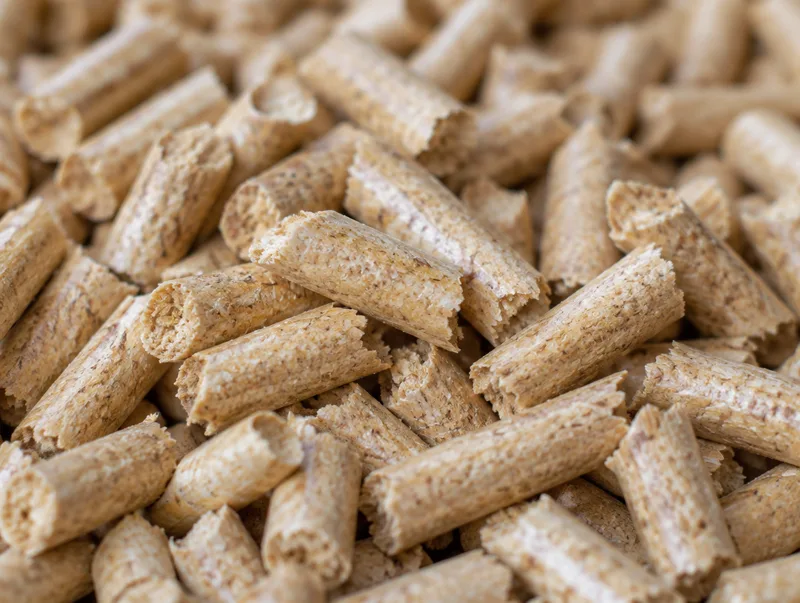
Standard wood pellets.
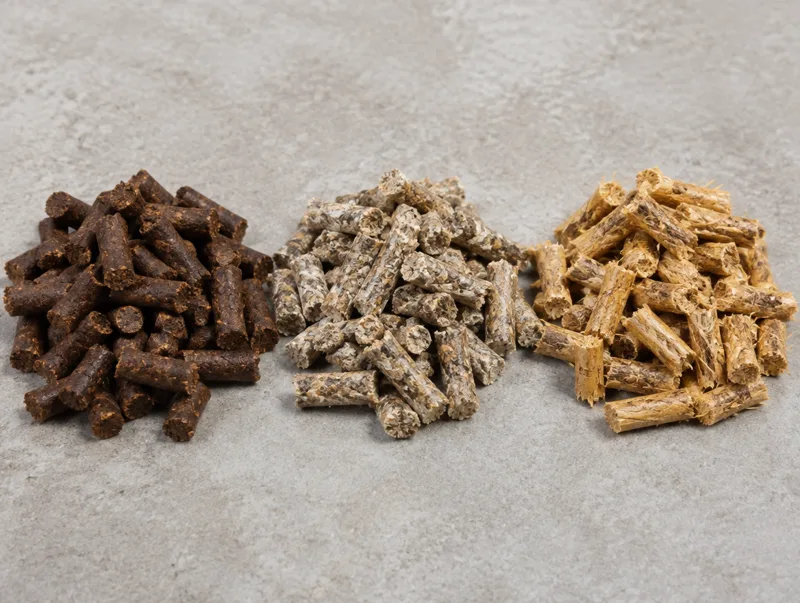
Coffee grounds, mushroom substrate, wood–straw blends and more.
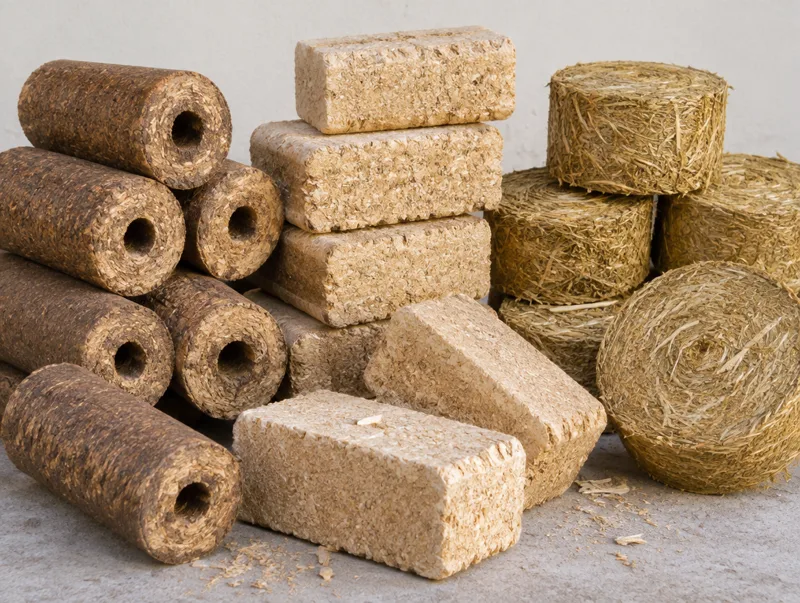
Different types of briquettes. For use in the F60 TC they must first be broken into smaller pieces.
We support fuels with up to 15 % water content (full rated output up to 10 %). Not sure about your biomass? Tell us what you have and we will check it. →
Smaller than you think – on both counts.
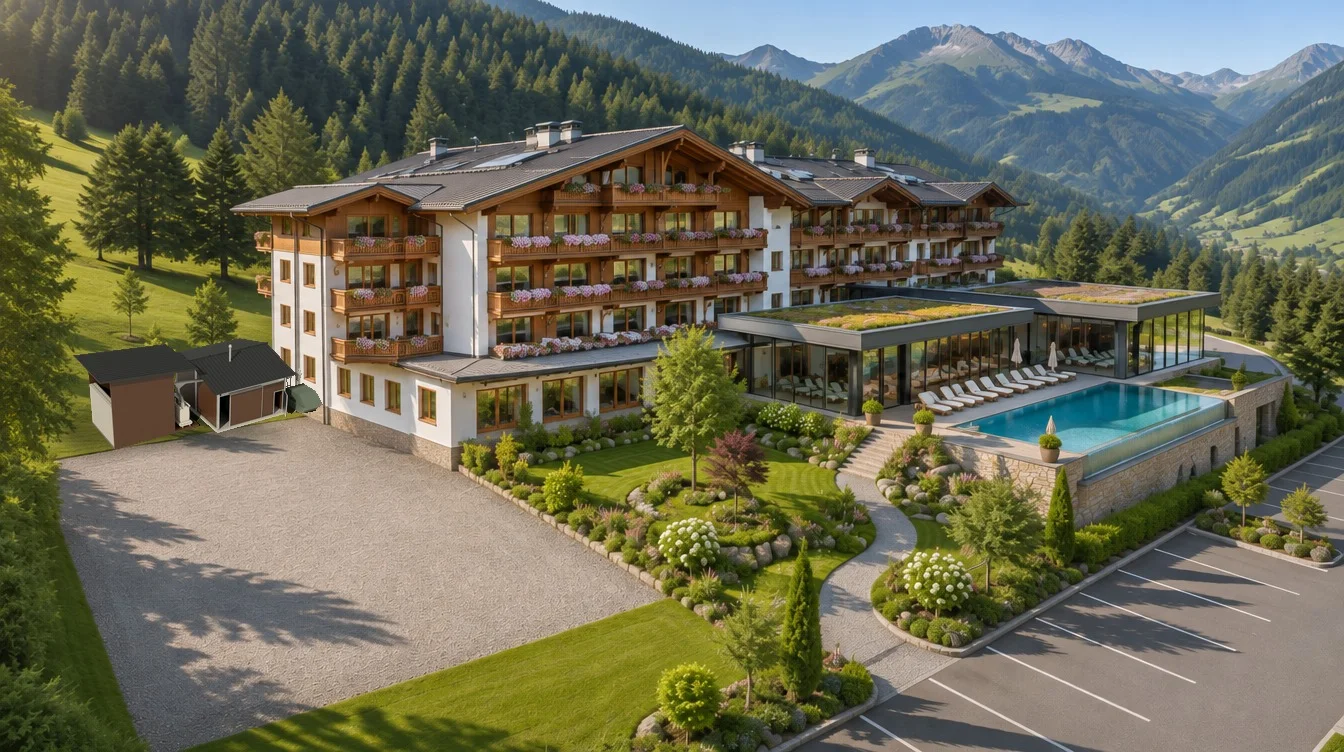 FLOYD F60 TC with bunker
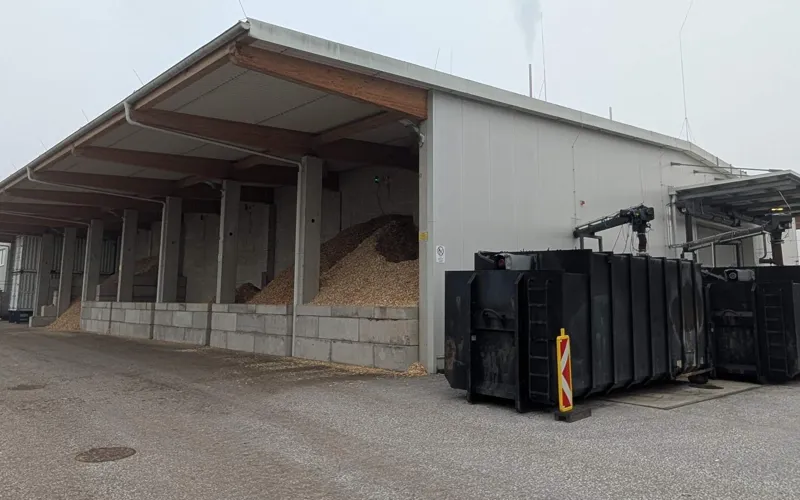
One F60 TC with its wood-chip bunker fits on a corner of your yard. The building measures about 7.7 × 8.7 m, the bunker 4.8 × 4.8 m.
Illustration: spa hotel with a one-unit FLOYD plant, true to scale – the plant needs about the space of a garage building.1 week
Installed and commissioned within one week. FLOYD delivers everything from one hand – plant, building, bunker, conveying and connections.
< 2 h per week for you
0 h of work for you
One unit, about 3 kg of biochar per hour, continuous operation. The container size is chosen with you.
Our reference plant in Griffen has been running around the clock for more than 16 months and makes our own site self-sufficient. Visit it, look at the live data – or join us on a service day.
Arrange a visitA power plant is only as good as the people behind it. Every FLOYD plant is connected to our control centre. We see what your plant does – day and night – and react quickly, remotely or on site.
Want no work at all? FLOYD runs and maintains the plant for you. You get the energy – we take care of the rest.
Calculate with the carefree packageSun, wind and water deliver when nature allows – hour by hour and season by season. The F60 TC turns stored wood into electricity and heat around the clock, 365 days a year. For anyone aiming at 100 % energy self-sufficiency, that is the missing piece.
Output is set by your demand, not by clouds, calm days or low water.
When solar yields drop and heat demand peaks, the F60 TC delivers both power and heat.
Combine it with PV and a battery: the sun covers summer middays, the F60 TC covers nights, winter and dark days.
Schematic, typical profiles for Central Europe, shown as a share of each plant’s rated output. Real yields vary by site and year. F60 TC shown at rated output; planned maintenance not shown.
Hoteliers, mayors, plant operators and business owners use FLOYD plants – not because they love technology, but because they want reliable energy at a fair price.
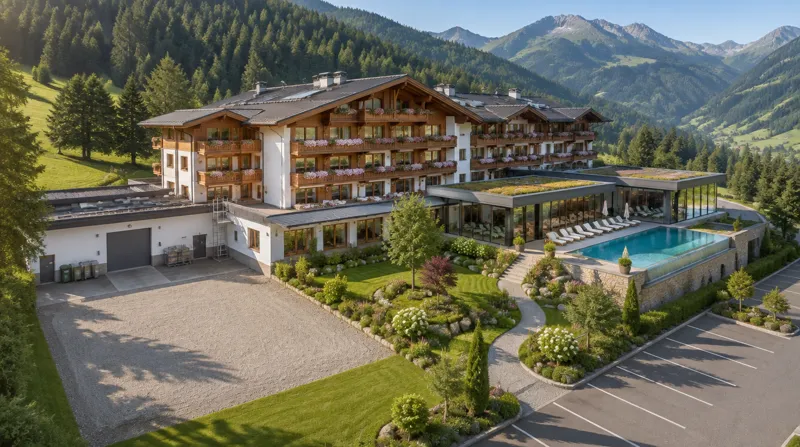
Hot water and power around the clock – your guests notice only the comfort.
→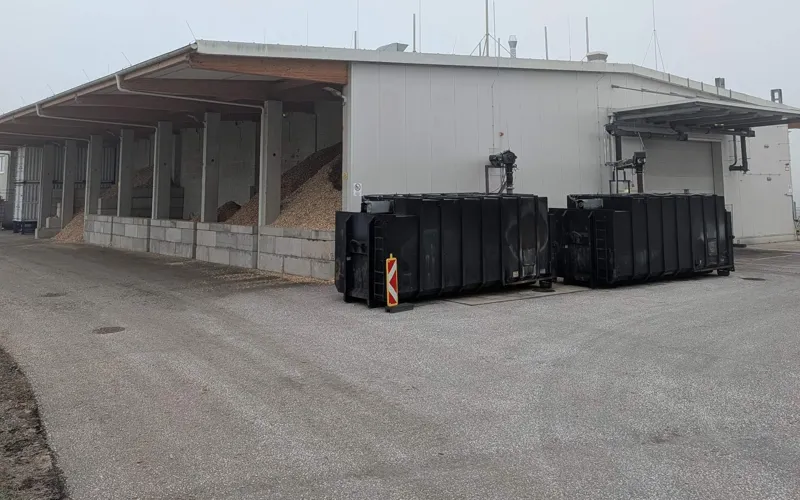
Regional wood, regional value, secure supply – with or without your own investment.
→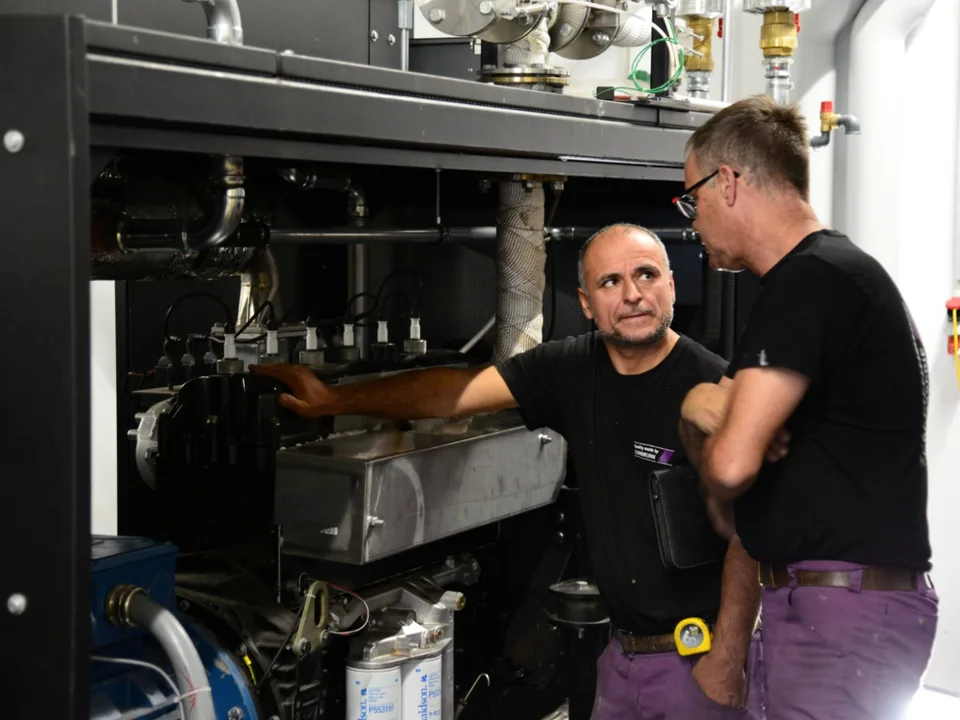
Stable energy costs for production, paint shops and processes.
→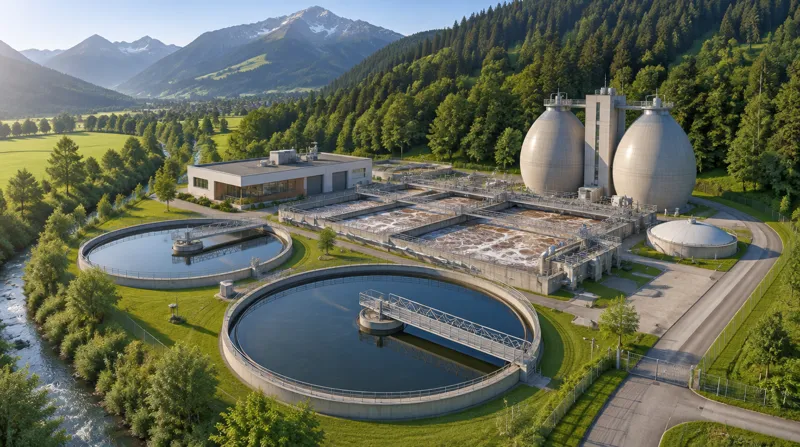
Power for aeration, heat for sludge drying – and biochar for the digester.
→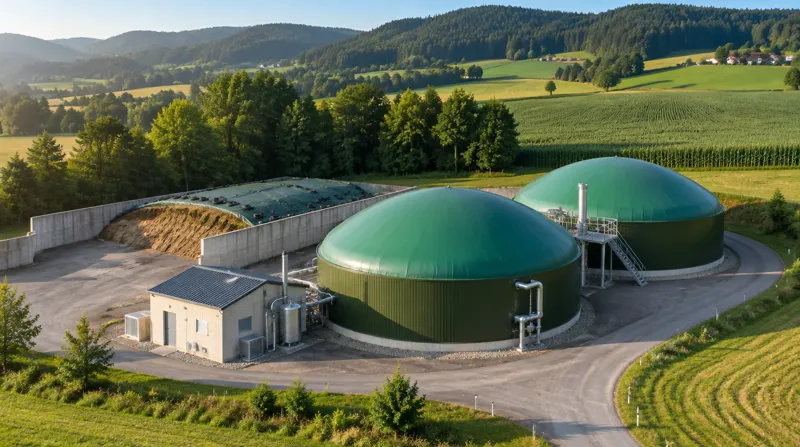
Use the woody material your digester cannot – and add biochar to the process.
→Sawmills, greenhouses, kilns and more – see where FLOYD plants fit.
→By using our wood residuals internally and efficiently, we cover a large share of our commercial electricity demand and also feed the heat we generate into our own local heating network.
Alois AbergerOwner and managing director, Thermoholz AbergerWeißbach bei Lofer, AustriaWe operate and maintain the plant ourselves – that only works if you have a reliable partner in the background. At FLOYD BioEnergy, response times are short and the work is solution-oriented. The plant runs stably and reliably and is an ideal addition to our core business.
Translated from German
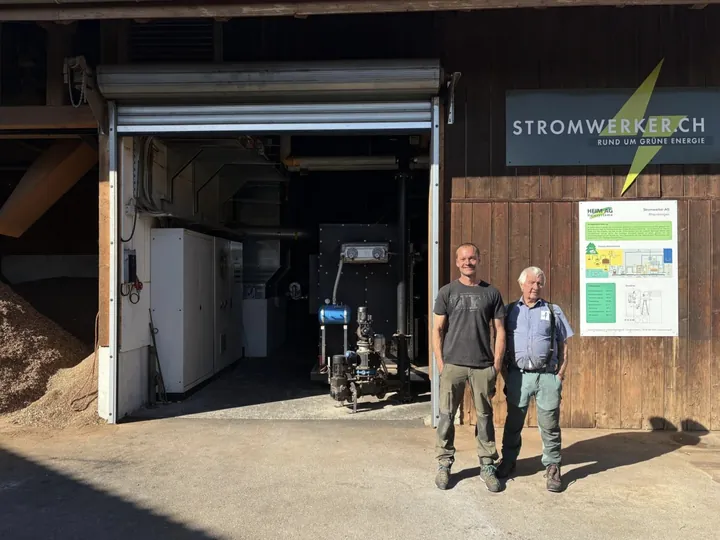 Simon BiedermannManaging director, Baumwerker AG / Stromwerker AGRheinklingen, Switzerland
The CHP was new territory for us, and we had to learn its operation and maintenance step by step. FLOYD BioEnergy was a reliable, patient and solution-oriented partner, always working to optimise the product for our application. Today the CHP runs stably and we operate it largely on our own. The resulting stable energy costs are of the utmost importance to our business at a time of uncertainty on the oil market.
Translated from German
Projects, events and what is new in the workshop – from our LinkedIn page and our own articles.
El Dorado County gave conceptual approval – local forest residues become power, heat, biochar and carbon credits.
Why we test what we build and look past the spec sheet.
Offcuts, bark, chips and shavings – turned into power, heat and biochar on site.
A body shop with four stoving booths, powered and heated by FLOYD.
Sawmills turn their own wood chips into electricity, kiln heat and biochar – around the clock.
Our plant in Rheinklingen, Switzerland.
New technology raises questions. Here are the ones we hear most – with straight answers.
Yes. The plant runs fully automatically. FLOYD monitors it around the clock and handles maintenance. With the carefree package we also operate it for you.
Our control centre sees every fault immediately and reacts remotely or on site. Your grid connection and existing boiler stay in place as a back-up, so you are never without power or heat.
FLOYD plants reach more than 90 % availability – over 8,000 operating hours a year. With several units, one can be serviced while the others keep running.
No. Wood chips go in and biochar goes out automatically. Your part is a 30-minute check once a week, ordering wood chips and changing the biochar container when it is full. Service follows a fixed plan and is done by FLOYD. With the carefree package FLOYD also takes over the weekly check and the biochar container – and on request the wood-chip logistics.
Any supplier of wood chips will do – or your own residues. The chips need max. 15 % water content; the plant can dry them with its own heat.
The plant stands in a closed building. A catalytic converter cleans the exhaust: at Carrosserie Zumbrunn the authorities measured NOx below 100 mg – without AdBlue.
Our calculator shows what your own electricity costs and when the plant pays for itself. If you prefer not to invest, our subsidiary FBE Griffen finances, owns and operates the plant and sells you energy at a fixed price.
Yes. Our reference plant in Griffen, Austria has been running continuously for more than 16 months and supplies our entire facility with power and heat. We share its operating data, and you are welcome to visit – or to join us for a service day and see the maintenance yourself.
Yes. Wood gas has powered engines for decades, and hundreds of wood-gas CHP plants run across Europe today. FLOYD plants are in operation in Austria, Switzerland, Japan and Canada.
If your business produces or buys woody biomass, the fuel for your own power plant is already in your yard.
Every kilowatt-hour bought from the grid is a cost you cannot plan. Industrial power prices in many markets have doubled in fifteen years.
When the grid goes down, production stops. One outage can cost more than a year of savings from any efficiency programme.
Carbon prices, ESG reporting and heating rules keep tightening. Fossil heat becomes harder to justify every year.
Electricity you produce and use on your own site never passes through the public grid. That changes the economics: you avoid much more than the energy price.
Self-consumed electricity does not use the public grid, so no network usage or loss charges apply to it. Your grid connection stays as back-up.
Depending on the country, self-generated renewable electricity is partly or fully exempt from electricity levies. In Austria, for example, renewable electricity that a producer generates and consumes itself is exempt from the electricity levy.
Your cost per kWh is set by your fuel, not by the market. Wood chips from the region have been far more stable than electricity and gas prices.
158 kW of hot water per unit replace gas, oil or propane for heating, drying and process heat – the heat is a by-product, not an extra cost.
The F60 TC modulates its electrical output between about 45 and 80 kW through an ABB four-quadrant converter and follows your load curve. In a plant with several units, units are added or taken out as demand changes. The result is demand-driven, non-export operation: no surplus, no feed-in tariff needed, no grid-capacity problem.
For peaks above the CHP output, or to keep power available during maintenance, the CHP can be combined with battery storage. The battery is charged in low-demand hours and covers short peaks – up to island operation for sites that need to run independently of the grid.
Choose a typical site and switch the battery on or off. The chart shows one working day, hour by hour.
Wood chips are converted into a clean wood gas in a fixed-bed gasifier. A ceramic hot-gas filter removes dust and tar, a gas engine drives the generator, and the heat of engine and gas is recovered as hot water. What remains is high-grade biochar with more than 90 % carbon.
| Electrical output (net) | 80 kW, modulating 45–80 kW |
|---|---|
| Thermal output | 158 kW hot water |
| Electrical efficiency | approx. 28 % |
| Wood-chip demand | approx. 62.5 kg/h (at 10 % moisture, max. 15 %) |
| Biochar | approx. 3 kg/h – about 25 t per year, > 90 % carbon |
| Footprint | 6.1 × 3.6 × 2.9 m, approx. 8.6 t |
| Grid connection | 400 V, 3-phase, 50/60 Hz |
| Weekly check | approx. 30 minutes per unit, no specialist trades |
| Availability | from 2027, approx. 6 months lead time |
From wood chip to kilowatt-hour in a closed, automated process – with heat recovered at every step. Select an assembly to see what it does. The pictures are the same ones our customers see in the FLOYD control system.
Simplified from the FLOYD process and instrumentation diagram. Numbers match the areas in the FLOYD HMI.
Eight assemblies work as one plant. A single control system with the FLOYD HMI starts, runs and monitors them together – from the fuel feed to the heat meter.
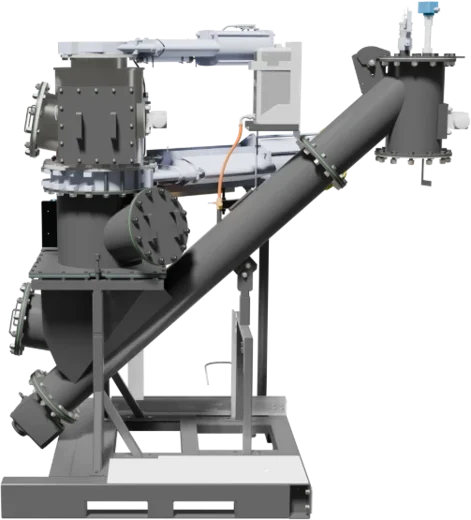
Responsible for: A steady, metered fuel feed and a gas-tight separation between fuel store and reactor.
Wood chips arrive from the day bin in a feed hopper. Level sensors call for fuel only when it is needed. Two motorised shut-off valves work as an airlock, so no air gets into the gasifier and no gas gets out. A screw then feeds the chips into the top of the gasifier.
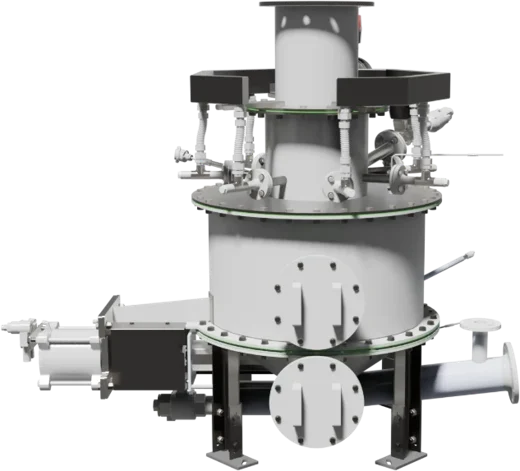
Responsible for: Converting the wood into a combustible wood gas of stable quality.
In the fixed-bed gasifier the wood reacts with a precisely dosed amount of air. Instead of burning, it is converted into a combustible gas – mainly carbon monoxide, hydrogen and methane. A stirrer and a vibrator keep the bed loose and even; an electric air heater is used for the start. Temperatures and pressures are measured continuously and the air supply is adjusted automatically.
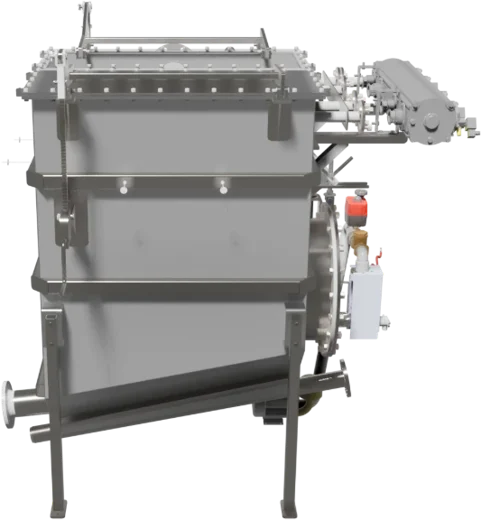
Responsible for: Clean gas for the engine and the separation of the biochar.
The hot gas flows through ceramic filter candles. Dust and the biochar carried out of the gasifier stay on the outside of the candles, while the gas is still hot enough that tars remain in the gas phase instead of condensing. Short compressed-air pulses clean the candles automatically. The separated biochar collects in the filter hopper – this is the only point where biochar leaves the process.
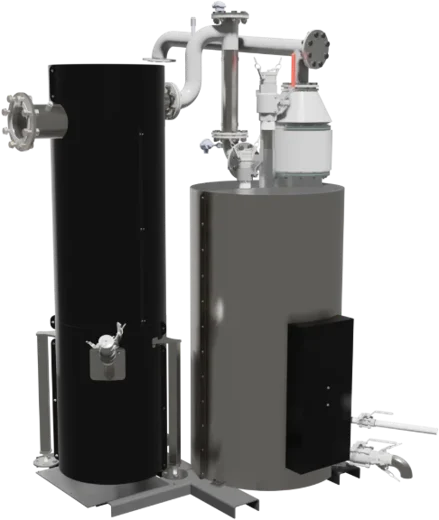
Responsible for: Cooling the clean gas to engine-intake temperature and protecting the engine.
A heat exchanger cools the clean gas with the heating water – this is one of three heat-recovery stages. Cooler gas is denser, so the engine gets more energy per stroke. A final safety filter then catches anything that could reach the engine; condensate is drained off.
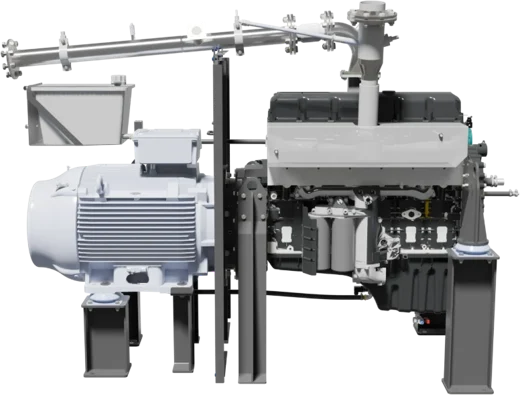
Responsible for: Turning the wood gas into electricity – synchronised with your grid.
The gas is mixed with filtered combustion air and burned in a gas engine. Lambda, ignition and throttle are controlled continuously, so the engine runs cleanly at changing gas quality and load. The engine drives a generator that delivers three-phase electricity at 400 V. Output modulates with your demand.
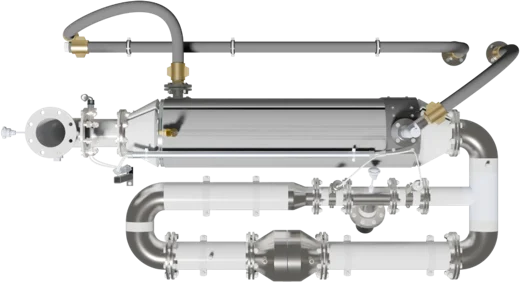
Responsible for: Clean exhaust and recovery of the exhaust heat.
Behind the engine a catalytic converter cleans the exhaust gas. An exhaust heat exchanger then takes the remaining heat into the heating water – the last and hottest heat-recovery stage – before the cooled exhaust leaves through the stack.
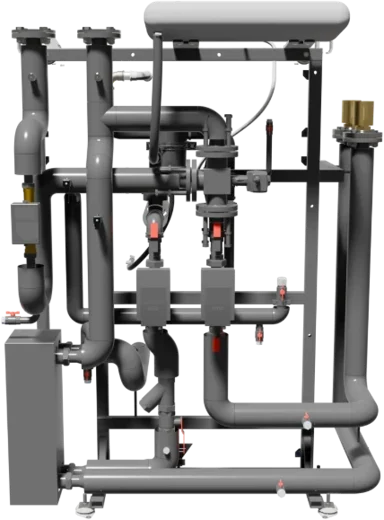
Responsible for: Engine cooling, collecting all recovered heat and delivering it at a constant temperature.
The return water from your heating system first cools the engine, then the product gas and finally the exhaust gas – so it gets hotter at every stage. Pumps and a mixing valve keep the flow temperature constant, and a heat meter records the delivered energy.
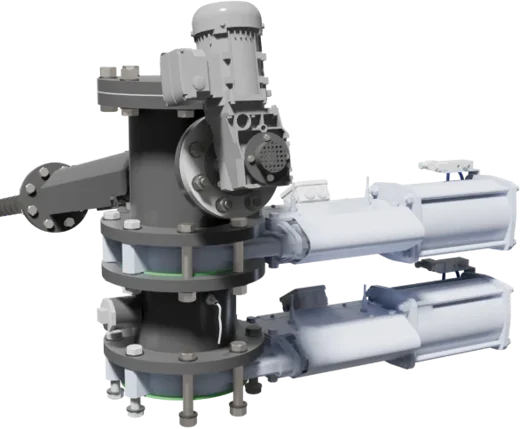
Responsible for: Continuous, gas-tight removal of the biochar from the process.
A screw conveyor takes the biochar from the hot-gas filter into a closed collection bin. Level sensors trigger the discharge automatically, and the bin is emptied through a valve into your container. With more than 90 % carbon the biochar is a product in its own right – for soil, feed or carbon-removal certificates.
A turnkey plant with one F60 TC unit and its wood-chip bunker. Wood chips go in – electricity, hot water and biochar come out. Fly through the plant, or select a part of it to see what happens there.
Figures for one unit at full load. Preview rendering from the CAD model – simplified materials.
The F60 TC turns solid biomass into four products. Most of the carbon leaves as energy; the rest stays solid as biochar and is removed from the atmosphere for centuries.
Wood chips, waste wood, nut shells, pellets and briquettes – regional residues that would otherwise rot or be burned.
80 kW per unit, 24 hours a day, independent of sun and wind.
158 kW hot water for buildings, processes and drying.
About 25 t per unit and year (3 kg per hour) with more than 90 % carbon – stable, high-grade and certifiable.
Every unit removes around 72 t of CO₂ per year from the atmosphere when the biochar is used in soil, concrete or other durable applications.
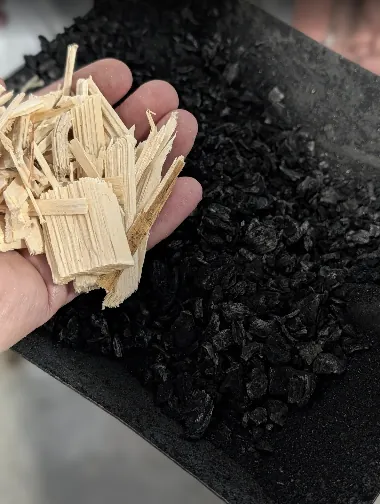
Biochar used in durable applications can be certified as carbon removal. FLOYD and its partners organise the whole chain – from analysis and certification to the sale of the certificates – an additional revenue stream for every plant.
More about CO₂ removal and biocharEvery F60 TC adds 80 kW electricity and 158 kW heat. Units run in parallel, so one can be serviced while the others keep producing – your site never goes dark.
Pilot or behind-the-meter supply for a hotel, school or workshop
Turnkey plant with belt dryers for green chips
Industrial power plant, e.g. sawmill with dry kilns
Regional energy hub
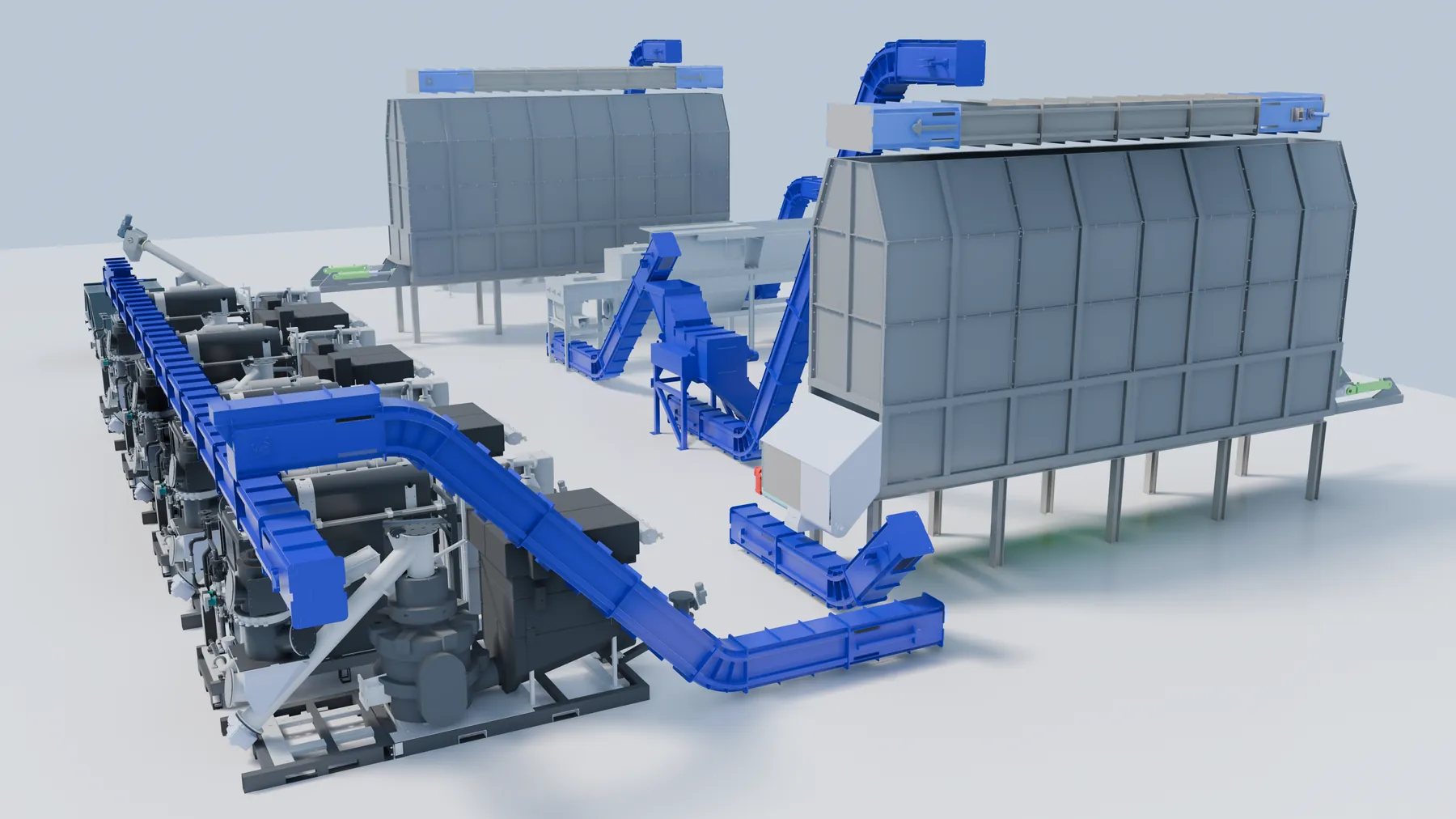
Within FLOYD Holdings, material handling from BE&E and VibraPro meets the CHP and control technology of FLOYD BioEnergy. Together we plan and build complete plants – with one contract, one point of contact and no interface risk between suppliers.
Truck receiving, chipping, screening with disc and vibratory screens, belt drying of green chips to 10 % water content.
Dust-tight SMART drag-chain conveyors, vibratory conveyors, moving floors, silos and buffer bins that feed every unit automatically.
F60 TC wood-gas CHP units: gasification, hot-gas filtration, engine and generator, heat recovery.
One plant control system manages conveying, drying, CHP units and energy flows – with live SCADA and remote service.
Automatic discharge, central collection screws, biochar bins and loading – ready for sale or certification.
The F60 TC is built on the same gasifier, gas cleaning and container as the F60 already in commercial operation on three continents.
Salzburg, Austria – Family-run sawmill
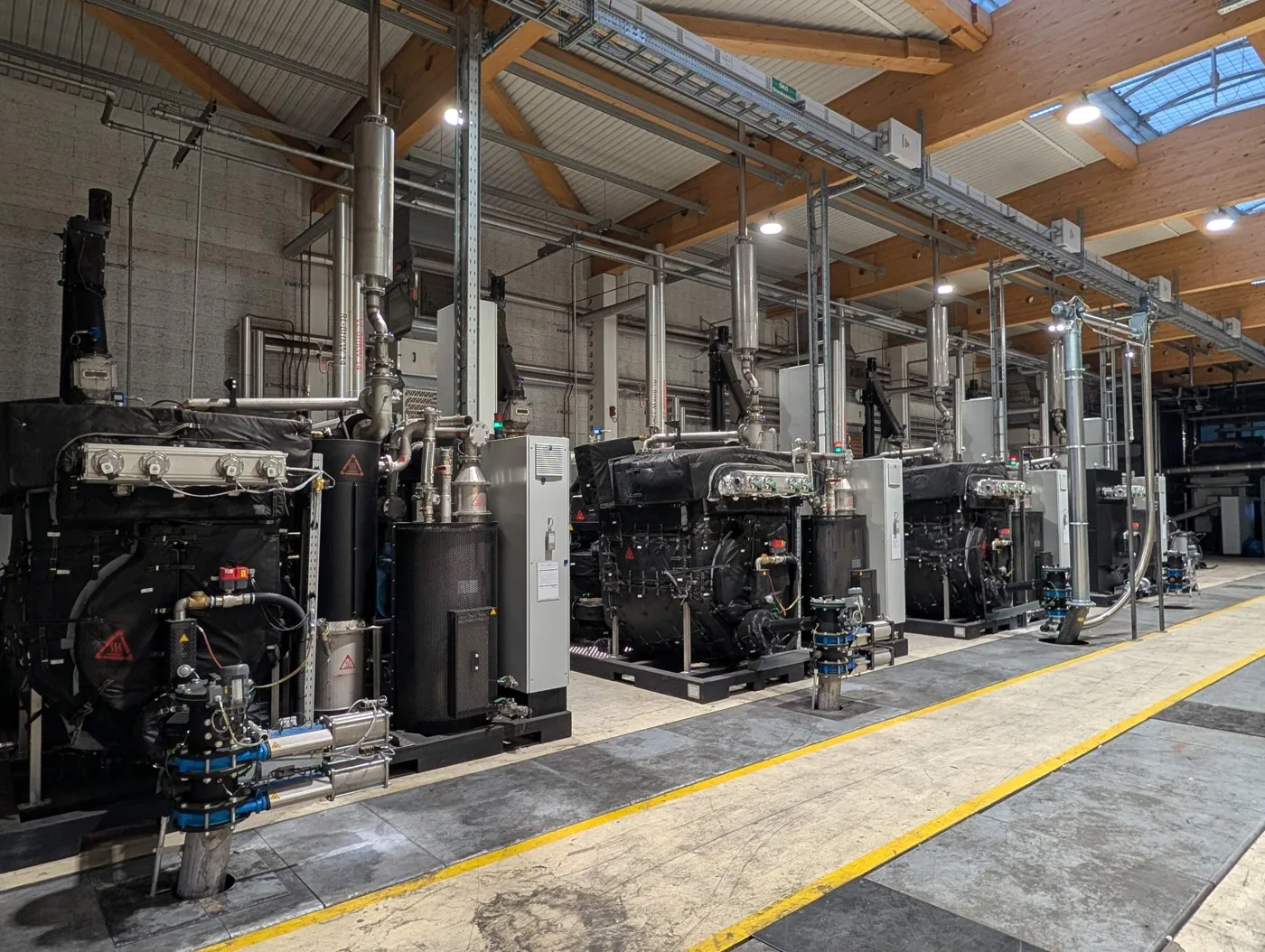
Griffen, Carinthia, Austria – District heating
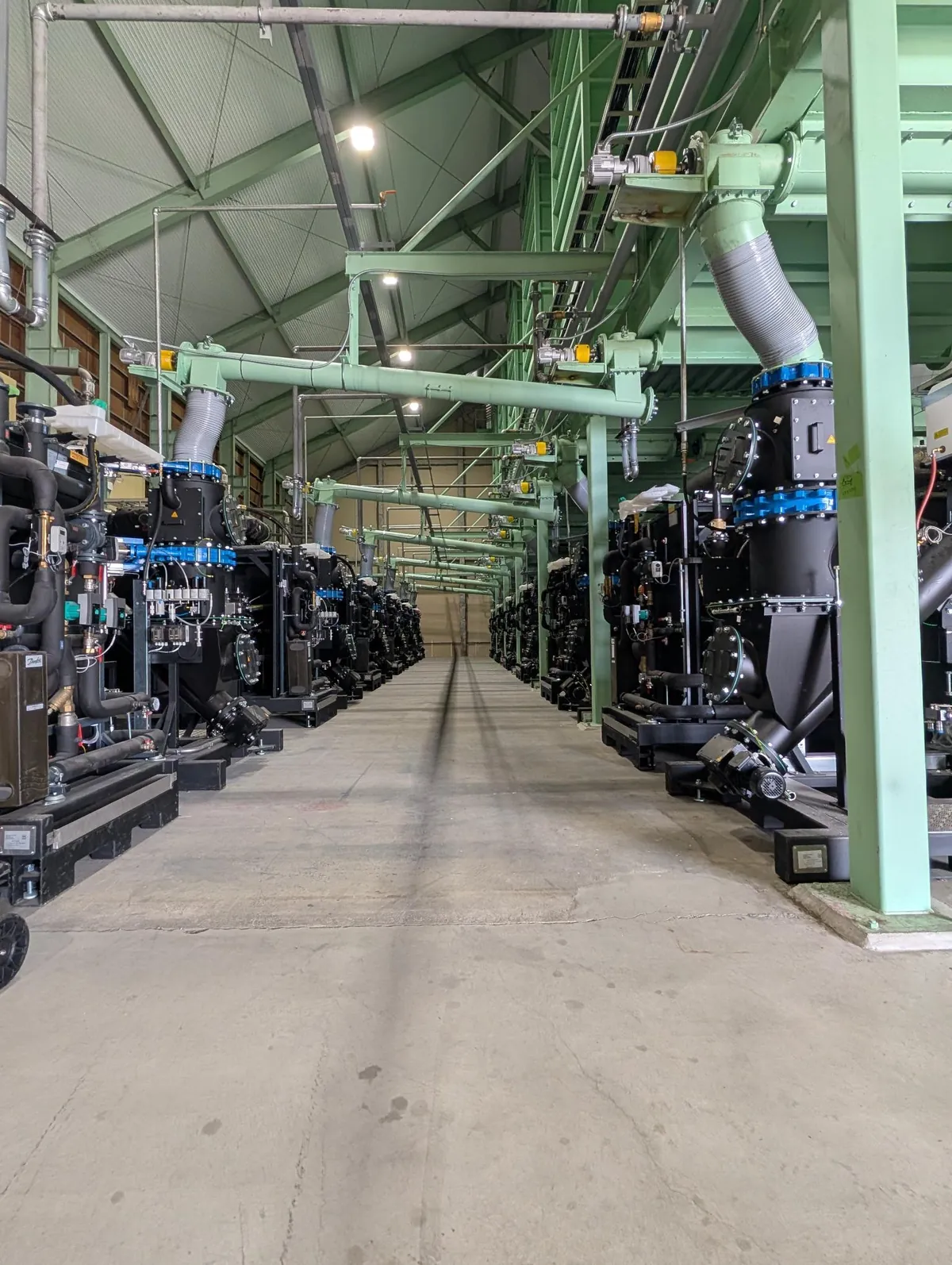
Japan – Commercial power plant
Rheinklingen, Switzerland – Arborist company
Sissach, Switzerland – Body and paint shop
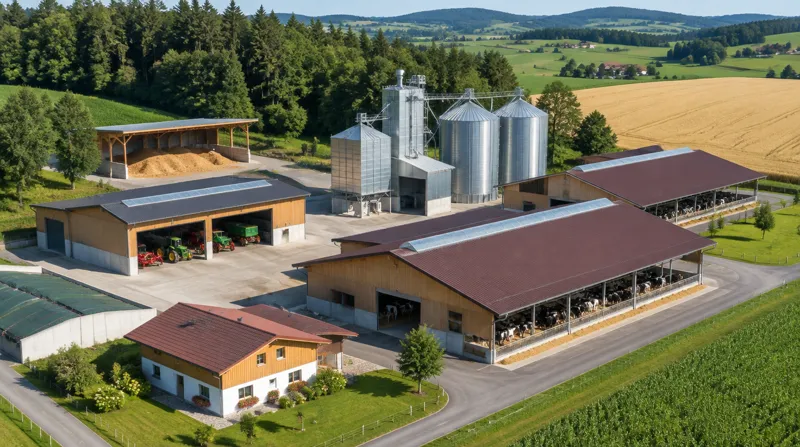
A 200 kW biogas plant was dismantled because of new legal requirements. An F60 now uses the existing infrastructure to supply the farm with heat and power. Installation in progress.
An F60 operated by FBE Griffen makes our own factory energy self-sufficient. We run what we sell.
Conceptual approval by the Board of Supervisors in October 2026. Local forest residues will replace propane and reduce wildfire fuel.
Phase 1 with a four-unit pilot, designed for expansion. In engineering.
Single-unit pilot in operation, validating the system for the North American market.
FBE Griffen FlexCo, a wholly owned subsidiary of FLOYD BioEnergy, finances, owns and operates F60 plants at customer sites. You provide the location and buy heat or electricity at a fixed price – without investment of your own.
Residues become power for saws and heat for dry kilns.
Offcuts and chips power the processes they come from.
Year-round base-load heat plus renewable power.
Pools, saunas and hot water around the clock.
Heat for barns and drying, biochar for the soil.
High-temperature heat for stoving booths and processes.
Heat and power for cultivation all year.
Base load, digester heat and biochar – towards energy neutrality.
Re-use infrastructure and boost methane yield.
FLOYD BioEnergy develops and builds wood-gas CHP plants in Griffen, Carinthia. The technology goes back more than 20 years and twelve design generations. Since 2025 we are part of FLOYD Holdings, an industrial group founded in 2011 with around 200 employees in North America that designs and manufactures material-handling equipment through BE&E and VibraPro.
One partner from fuel to power: planning, material handling, manufacturing, commissioning, training, remote monitoring and spare parts – or a fixed-price energy contract where we own and operate the plant.
FLOYD Holdings, BE&E and VibraPro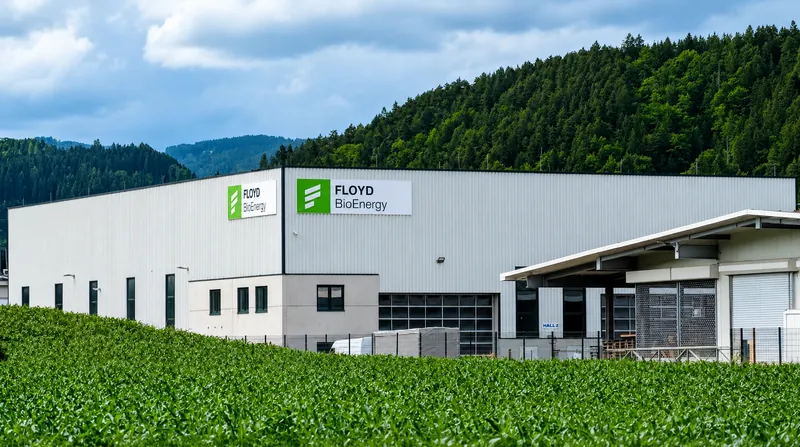
Send us your electricity bills, heat demand and available biomass. We size the plant with you and show you the numbers.
office@floyd-bioenergy.at